



Social Poker Apps vs Real Poker Key Takeaways
Understanding the Social Poker Apps vs Real Poker landscape is essential whether you play for fun or for profit.
- Social Poker Apps vs Real Poker hinges on monetization: free-to-play vs real-money wagering.
- Legal status differs wildly across jurisdictions — social apps fly under gambling laws, while real platforms require licenses.
- Community and skill development vary greatly; choose based on whether you want casual fun or competitive profit.
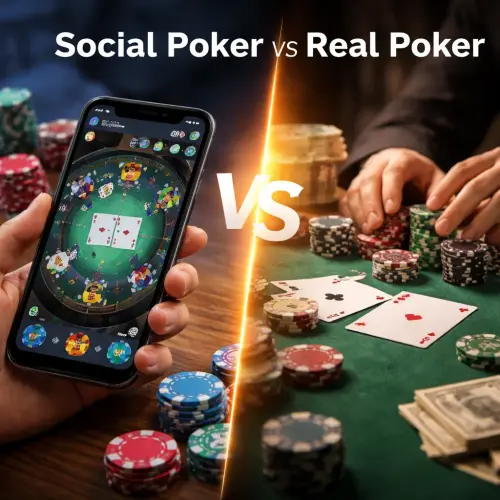
What Is the Core Difference Between Social Poker Apps and Real Poker Platforms?
The most immediate distinction between Social Poker Apps vs Real Poker is how you fund your gameplay. Social poker apps operate on a freemium model where you buy virtual chips with real money but cannot cash them out. Real poker platforms, on the other hand, involve depositing real money and withdrawing your winnings.
This fundamental difference shapes everything else — the level of risk, the emotional intensity, and even the quality of opponents. Social apps prioritize entertainment and retention, while real platforms focus on liquidity, fairness, and compliance.
How Monetization Differs: Virtual Chips vs Real Stakes
Monetization is the biggest fork in the road when comparing Social Poker Apps vs Real Poker. Social apps generate revenue through in-app purchases of chip bundles, cosmetic upgrades, or subscription perks. You might spend $99 on a chip package, but you cannot redeem those chips for cash or prizes of monetary value.
Real poker platforms make money primarily through rake (a small percentage taken from each pot) or tournament fees. Players deposit money, compete for real cash, and can withdraw their bankrolls at any time. This creates a completely different psychological environment — losses hurt more, and wins feel far more rewarding.
In-App Purchases vs Cash Deposits
With social apps, you are essentially paying for entertainment, similar to buying a movie ticket. Real platforms treat your deposit as a bankroll you manage. Many casual players misunderstand this distinction and mistakenly believe social apps are a stepping stone to real profits.
Legality and Regulation: Play Money vs Real Money Rules
Legality is a critical differentiator in the Social Poker Apps vs Real Poker debate. Social poker apps are generally unregulated because they do not involve real-money gambling. They sidestep gambling laws by labeling their transactions as purchases for entertainment. This means they can operate in most countries without licenses, but it also means players have no legal recourse if the app shuts down or deletes chips.
Real poker platforms must obtain licenses from regulators like the UK Gambling Commission, Malta Gaming Authority, or state-level bodies in the US. They undergo audits for fairness, adhere to anti-money laundering rules, and often provide responsible gambling tools. This regulatory oversight offers a layer of protection that social apps lack entirely.
Geographic Restrictions
Social apps are available globally with few restrictions, while real-money platforms face strict geographic blocks. For example, many real-money poker rooms cannot accept players from the United States, while Zynga Poker and similar social apps are available nationwide. For a related guide, see PokerStars or Natural8? A Filipino Player’s Guide.
Gameplay Experience: Casual Fun vs Competitive Edge
Gameplay depth varies significantly between Social Poker Apps vs Real Poker. Social apps are designed for quick, mobile-friendly sessions with lighter competition. They feature flashy animations, power-ups, and simplified rules to keep casual gamers engaged. Hand histories are rarely available, and opponent skill levels vary wildly. For a related guide, see Natural8 vs PokerStars: Which Poker Site Should Filipinos Choose?.
Real poker platforms cater to serious players who study the game. They offer deep customization, detailed hand histories, HUD compatibility (where allowed), and highly competitive player pools. The gameplay is slower, more thoughtful, and psychologically demanding. If you want to improve your poker skills, real money platforms provide a far better training ground.
Tournaments and Prize Structures
Social apps offer leaderboard tournaments with virtual prizes like exclusive chips or decorations. Real platforms run guaranteed prize pools, satellite tournaments to live events, and multi-table tournaments (MTTs) with life-changing sums. The World Series of Poker (WSOP) app is a hybrid — it offers social play with WSOP branding but also hosts real-money events in regulated states.
Community and Social Features: Friends vs Foes
Community dynamics also separate Social Poker Apps vs Real Poker. Social apps emphasize building a casual community — you can send gifts to friends, join clubs, and chat freely. The environment is generally friendly and low-pressure.
Real poker platforms cultivate a more serious atmosphere. Tables often have minimum buy-ins that filter out casual players. Chat can be competitive or even hostile. However, this environment also attracts dedicated players who want to discuss strategy, analyze hands, and grow together. Many real-money sites have thriving forums and Discord communities.
Pros and Cons at a Glance
| Aspect | Social Poker Apps | Real Poker Platforms |
|---|---|---|
| Monetization | In-app purchases, no cash out | Real money deposits and withdrawals |
| Legality | Unregulated, widely available | Licensed, restricted by location |
| Gameplay Depth | Casual, fast-paced, simplified | Serious, strategic, detailed |
| Community | Friendly, casual, gift-giving | Competitive, skill-focused |
| Skill Development | Limited, no hand histories | Extensive via tracking tools |
| Financial Risk | Low (only on purchases) | High (can lose deposits) |
| Prize Potential | Virtual only | Real cash and tournament entries |
Which Should You Choose Based on Your Goals?
Your choice in the Social Poker Apps vs Real Poker comparison depends on why you play. If you are a casual gamer who enjoys poker-themed entertainment without financial pressure, social apps are perfect. They are risk-free, fun, and work great on mobile during commutes.
If you are an aspiring professional or a serious enthusiast who wants to improve and potentially earn income, real poker platforms are the only option. They offer the stakes, the data, and the competition necessary for growth. Beginners often start on social apps to learn rules, then transition to micro-stakes real-money games to develop their skills.
Affiliate Marketers and App Developers
For affiliate marketers, the social poker niche offers higher conversion rates because apps are free to download and have lower friction. Real poker platforms offer higher commissions per player but require more regulatory compliance in marketing. App developers should note that social poker apps have lower development overhead but monetize slowly, while real-money platforms demand significant investment in security and licensing.
Common Mistakes When Choosing Between Social and Real Poker
Many players assume social poker apps are a safe way to practice for real money, but the skills do not transfer perfectly. Social apps allow loose play because there is no real penalty for losing virtual chips. Real poker punishes every mistake financially, which changes decision-making entirely.
Another frequent error is underestimating the time required to build a bankroll on real platforms. Beginners often deposit $50 and expect to turn it into thousands quickly, which leads to frustration. Social apps, conversely, can lead players to spend hundreds on chips they cannot redeem, thinking they are building value.
Useful Resources
For further reading on regulations and industry insight, check the UK Gambling Commission’s guide to social gaming. To explore hand-tracking software that works on real platforms, visit PokerTracker’s official site.
Frequently Asked Questions About Social Poker Apps vs Real Poker
Can you win real money with social poker apps ?
No, social poker apps only offer virtual chips and in-game currencies that cannot be redeemed for cash or prizes of monetary value.
Are social poker apps legal everywhere?
Generally yes, because they do not involve real-money wagering, but some countries have blanket bans on gambling-themed apps regardless of stakes. Always check local laws.
What is the best real poker platform for beginners?
Platforms like PokerStars and 888poker offer micro-stakes games and beginner-friendly tutorials that help new players transition from social apps.
Do real poker platforms offer mobile apps?
Yes, most licensed poker rooms provide fully functional mobile apps for iOS and Android that support real-money deposits and withdrawals.
Can I use the same strategy for social and real poker?
Not exactly. Social apps encourage looser play, while real poker requires tighter, mathematically sound strategies because every decision costs real money.
How do social poker apps make money if they don’t offer real prizes?
They monetize through in-app purchases of virtual chips, cosmetic items, subscriptions, and advertising revenue from engaged users.
Are there any hybrid apps that offer both social and real-money play?
Yes, apps like WSOP and World Poker Tour (WPT) offer social play globally and real-money tables in regulated jurisdictions like Nevada or New Jersey.
Is it possible to test a real poker platform without depositing money?
Yes, most real-money platforms offer play-money tables where you can experience the software and community without risking actual cash.
Do social poker apps require ID verification like real platforms?
No, social apps rarely require ID verification since no real money or withdrawal is involved, making them more anonymous.
What are the biggest risks of social poker apps ?
The primary risks are overspending on virtual chips and the lack of regulatory protection if the app shuts down or suspends your account.
Do real poker platforms offer bonuses for new players?
Yes, they commonly offer deposit bonuses, free tournament tickets, and rakeback deals to attract new players. Always read the terms before claiming.
Can I play social poker apps offline?
Most social poker apps require an internet connection for multiplayer games, though some offer limited solo play against AI offline.
Are there age restrictions for social poker apps ?
Yes, most app stores require users to be at least 13 or 18, depending on the region, though enforcement varies compared to real-money platforms.
Do professional poker players use social apps?
Rarely for serious training, but some pros use social apps to relax or build a brand. They do not rely on them for skill development.
How do I know if a real poker platform is licensed?
Check the footer of their website for licensing information from regulators like the UK Gambling Commission, Malta Gaming Authority, or state commissions.
Can I play with friends on both types of platforms?
Yes, both social and real-money platforms offer private tables and clubs where you can invite friends to play together.
Which type has better graphics and user experience?
Social apps often invest heavily in polished graphics and smooth animations because they compete as entertainment products. Real platforms prioritize functionality over flashy design.
Do real poker platforms allow tracking software?
Some platforms allow HUD software like PokerTracker, but others like GGPoker explicitly ban third-party tracking tools. Always check the site’s terms of service.
What happens if a social poker app goes bankrupt?
Players typically lose all purchased chips and account data with no recourse. Real platforms, in contrast, must maintain segregated accounts for player funds in many jurisdictions.
Is it possible to make a living playing on real poker platforms ?
Yes, but it requires substantial skill, bankroll management, discipline, and time. Only a small percentage of players achieve long-term profitability.